
Welcome, ADHD Moms — you’re not alone, and you’re in the right place.
Tired of feeling like every day is a power struggle?
Imagine finally understanding what your child really needs—and showing up with calm, clarity, and connection (even when things get hard).
Parenting a child with ADHD is challenging—and even more so when you’re also navigating your own ADHD, burnout, or self-doubt. I’m Coach Sue, and I’ve been where you are. Let’s get you the tools, mindset shifts, and support you deserve.

Why This Approach Works
Did you know? The American Academy of Pediatrics recommends parent training in behavior management as the first line of treatment for kids under 6 with ADHD—and a key part of care for older kids too.
Empowering parents with brain-based strategies changes everything at home.
Hey, it's nice to meet you, I'm Sue Panciocco
I’m not a therapist or a distant parenting guru—I’m a mom who’s walked this path myself, raising two neurodivergent kids while navigating my own late ADHD diagnosis at 40.
Over the past decade, I’ve learned what actually helps ADHD families shift from constant conflict to sustainable calm.
Now, I share those exact tools with other moms through practical, bite-sized strategies built for real life.
It’s not about fixing kids—it’s about empowering parents. And when parents feel supported and confident, kids thrive too.

Choose How You Want to Start Today
Option 1: The Free Resource
3 Hacks to Stop Daily Battles
The 3 minute in-the-moment reset for ADHD Moms
Get quick, actionable tweaks to de-escalate meltdowns, handle executive function hurdles, and bring peace back to your daily routine without nagging or yelling.

Option 2: The $27 On-Demand Workshop
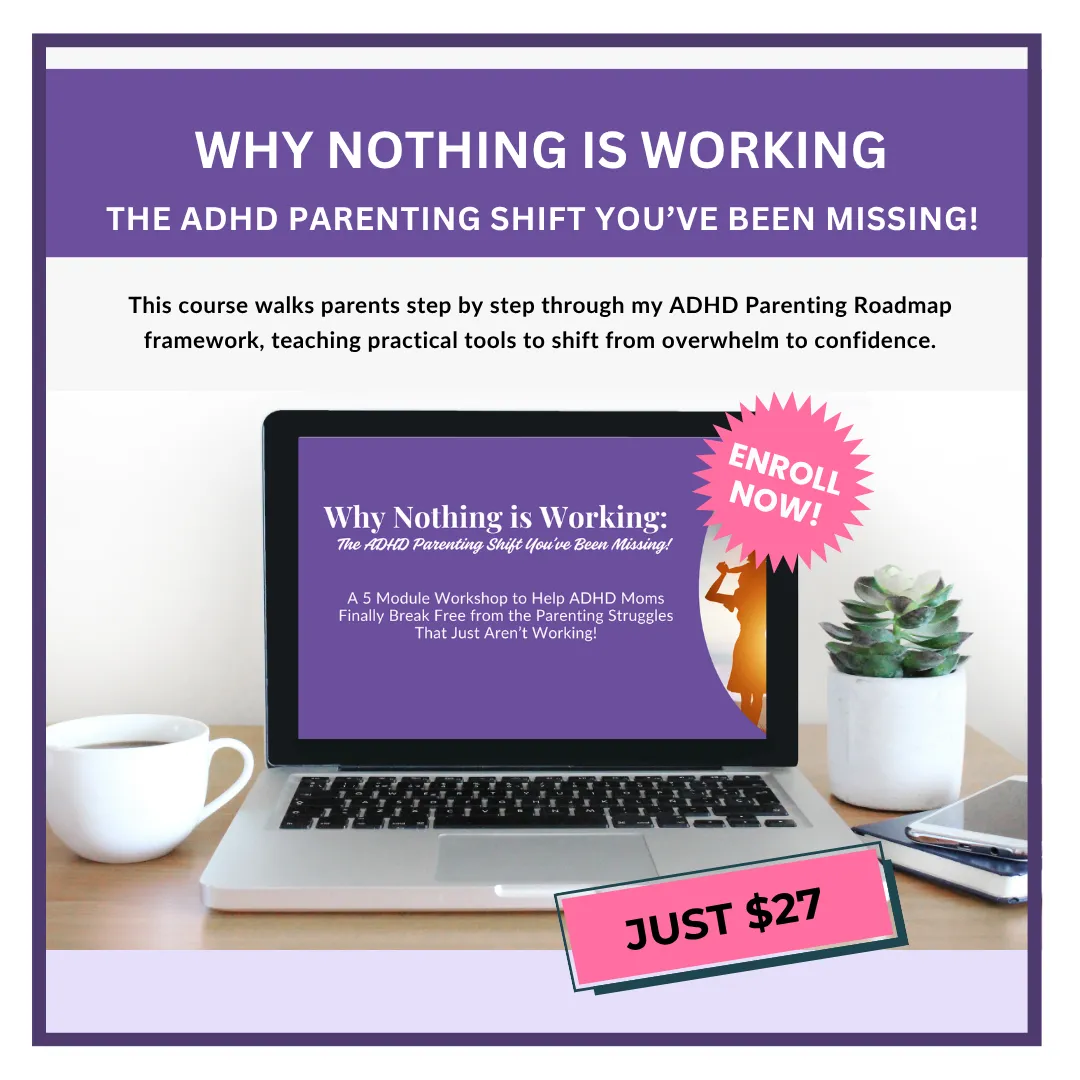
Why Nothing is Working
The ADHD Parenting Shift You've Been Missing
A practical, 5-module mini-course designed for busy schedules. Learn why traditional advice backfires, how to create routines that actually stick, and how to stop daily power struggles for good.
What Parents Are Saying

I was looking for a magic bullet. There's no magic bullet. But these changes are not as hard as I was nervous they would be. A lot of it just coming from your heart and common sense. That is a journey of changing behaviors and taking steps forward, taking steps backwards.
So it's more like it's a commitment to how you want that relationship to look and how you want your household to feel...I'm more aware, more present of what I'm doing and it can flow through my parenting"
Gina
-mom of twin daughters
In the beginning, I found it hard and I think it's because it was just a different technique for me, but within no time, I was finding it really good regardless of the reaction I was getting from Paul. It was really helpful with the work we were doing.
And I think after so long, it just comes normal, like a habit. So you get used to taking a backseat and thinking, how do I react to this? I think for me, that's been the root."
Sarah
-mom of 19 year old son
You Don’t Have to Do This Alone
Come hang out with over 7,000+ ADHD moms who are walking the exact same road. We share wins, talk through tough days, and figure it out together..
Frequently Asked Questions
Not sure what you need most right now? Find answers to commonly asked questions or send me a message and I’ll help point you in the right direction.
What does an ADHD parent coach do?
As a coach, I support you—not just your child’s diagnosis. I help you understand how ADHD (and other challenges) affect your child’s behavior, and I give you practical, ADHD-friendly strategies to use at home. Coaching is about guiding you, encouraging you, and helping you parent with confidence.
What is parenting training?
Parenting training gives you tools and strategies to handle daily challenges with your child. Instead of focusing only on your child’s behavior, it helps you respond in ways that build connection, reduce conflict, and create a calmer home.
What are the benefits of parent training?
When you learn new ways to parent a differently wired child, you’ll notice real changes: fewer power struggles, less yelling, and more cooperation. Your child’s self-esteem grows, your stress decreases, and your whole home feels calmer. It’s not about perfection—it’s about progress and connection.
And it’s not just me saying this. The American Academy of Pediatrics recommends parent training in behavior management as the first line of treatment for young children with ADHD—even before medication. For older kids, they recommend combining parent training with school supports and other therapies. In other words: this isn’t “extra,” it’s essential.

How much does this cost?
The cost depends on the type of support you choose—some resources are free, while workshops and programs vary in price. I also offer options at different levels so you can find something that fits your family and budget.
The bigger question is: what’s the cost of staying stuck where you are? Most moms tell me the peace and confidence they gain is priceless.
What if I don’t have much time?
I get it—moms are already stretched thin. That’s why everything I offer is designed to be simple, practical, and easy to fit into real life. Even small shifts can make a big difference.
What if my partner isn’t on board?
That’s very common. The good news is, the changes you make can shift the whole family dynamic. Many moms start on their own, and once their partners see the difference, they often get more interested and supportive


